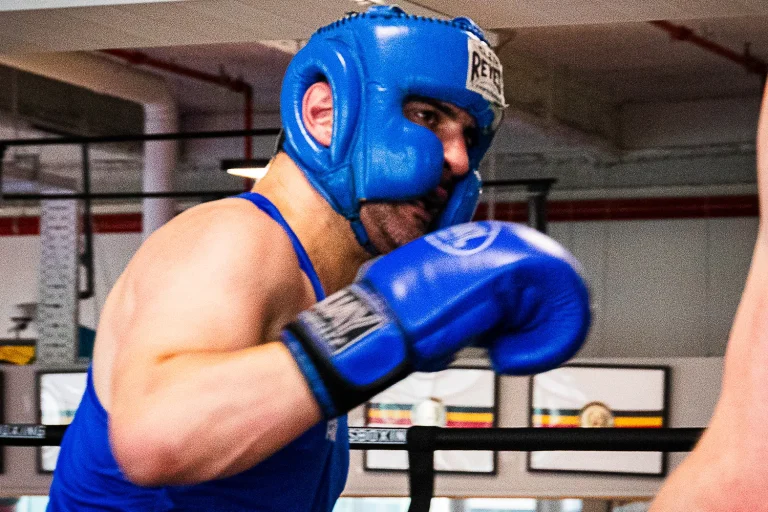




To progress in boxing, training isn’t the only factor to take into account. Nutrition for boxers plays a major role in your progress in the sport. Eating properly and sticking to your diet are key behaviours for success in boxing. They help you progress and keep an athletic body, not to mention staying healthy. Nutrition for boxers must be healthy, balanced and suited to your profile. To eat well as a boxer and enjoy the full benefits of boxing, follow our advice here.
Nutrition for boxers: calories
Calories represent the amount of energy that food provides. If you consume more calories than you burn, you gain weight. If you consume fewer, you lose weight. Depending on your goals (losing, gaining or maintaining weight), you will need to work on this factor. Keep in mind that everyone has a different metabolism, meaning that no two bodies burn the same number of calories, even at the same height and weight.

So you need to calculate how many calories you take in and look at the results after a week. You then adjust your diet until you get the results you want. While it may be difficult at first, it will soon become routine, especially once you know how many calories you need to eat each day.
Eat healthy food
Boxers also need to eat healthy food. That means cutting out processed foods, which most people eat. This type of food harms your health, upsets your hormonal balance and contributes to a drop in your sporting performance. Besides processed foods, avoid fried food, foods high in saturated fat and excessive sugar.
Boxers should favour good fats over bad ones, for example by eating fish or nuts, and replace sugar with complex carbohydrates, which are better for blood sugar levels and help avoid fat gain.
Balancing macro- and micronutrients
Calories aren’t the only thing to count when it comes to eating well as a boxer. It’s important to give your body the macro- and micronutrients it needs. To do so, you need to eat enough protein, as well as fats and carbohydrates (always from healthy foods).
Finally, remember to eat enough fruit and vegetables for their vitamins and minerals (micronutrients), but also for their fibre, which supports healthy digestion.
Vary your diet
One trap to avoid if you want to eat well and progress in boxing is always sticking to the same foods. Eating the same diet every day will lead to deficiencies, because no single food can provide all the vitamins and minerals in sufficient quantities on its own. Varying your meals is essential in boxing if you want to feel full of energy in training or in a fight.
Meal timing, a key factor
The timing of your meals is an important part of your diet, especially for a boxer. To give it your all in boxing training, you really shouldn’t have a full stomach. This is even more true when it comes to a competitive fight, where meal timing is absolutely crucial. To be at your best, you should eat at least 2 hours before boxing, or even longer if it’s a very substantial meal.
Apart from training, boxers also need to think about the timing of their meals throughout the rest of the day. For example, eating when you wake up is important to start the day full of energy and give your body the nutrients it needs to get going. That’s why a healthy, balanced breakfast should matter to every boxer.
After training, it is advisable to eat within the following 45 minutes. A boxer’s body and muscles are drained after exertion and need to refuel. A meal rich in protein and carbohydrates is particularly recommended.

Finally, good sleep is important to support muscle recovery. That’s why the last meal of the day, dinner, should be relatively light. Sleeping on a full stomach is difficult and very unpleasant, and it doesn’t support optimal recovery. Boxers should therefore eat in moderation before going to bed.
Hydration, an integral part of nutrition for boxers
When talking about a boxer’s diet, you also need to think about water, not just food. Keeping the body hydrated is extremely important to stay in shape for training, but it plays an even bigger role than that. Without water, the body becomes dehydrated, especially in boxers, whose physical activity is intense. Boxers should therefore never go short of water if they want to stay healthy. They should even drink more than average, both during and outside of training.
Water is also important for digestion and allows boxers to eat comfortably, without digestive problems.

Some examples of foods for boxers
Here are a few examples of foods known to be healthy and to offer good nutritional value, which boxers can draw inspiration from.
Carbohydrates
There are plenty of carbohydrate-rich foods. Rice and whole grains (pasta, wholemeal bread, oats, etc.) are well-known examples in nutrition for boxers. Fruit is also highly recommended because, in addition to carbohydrates, it provides plenty of vitamins and minerals. Be careful not to overdo it, though, as fruit contains simple sugars.
Fats
Fish is a must in a boxer’s diet for its omega-3 content. It also provides plenty of protein, which is essential for muscle growth. Nuts, avocado and olive oil are also good sources of fat.
Protein
Eggs, meat and fish are essential sources of quality protein. It is best to limit red meat, which is too high in saturated fat.
Vitamins and minerals
Vitamins and minerals are provided by all the foods mentioned above. However, to get enough of them, it’s important to eat fruit and vegetables.
Would you like to be coached by expert boxing coaches in Brussels ? Our boxing club is the place for you! In addition to physical training, we also offer personalised nutrition programmes to complement your preparation. Whatever your level, we offer you a FREE first trial class. You can reach us on +32 473 29 42 99 or via the contact form.