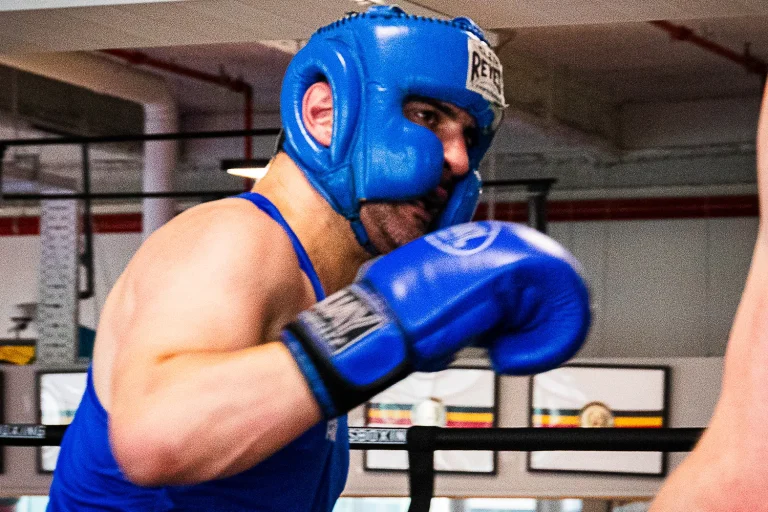




Ramadan can be a tough month for Muslims, especially the most active among them. Muslim boxers need to adapt their diet and their training methods to keep progressing during the holy month. Ramadan may look like an obstacle to athletic performance, but it isn’t, and many athletes have proved it. At NBSBoxing, we give you all the advice you need to keep boxing during Ramadan.
Timing, a key factor for boxing during Ramadan
One of the most important things Muslim boxers need to adjust during Ramadan is the timing of their boxing sessions. Fasting means going without any source of energy or hydration from sunrise to sunset. As a result, poorly timed boxing training could weaken those taking part, or worse, put them at risk. If training takes place several hours before breaking the fast, the athlete will stay dehydrated for too long, and the body will not like that at all.
To avoid problems, our advice is to schedule your training session in one of two time slots. The first option is to train so that you finish just before breaking the fast. That way, the athlete can refuel and rehydrate properly after the effort. The other ideal time to train during Ramadan is some time after breaking the fast. Once your energy is restored, you feel more able to exercise. You do, however, need to wait until you have digested your meal.
Adapted opening hours at the club
At NBSBoxing, we change our opening hours during the month of Ramadan. We adjust them to better suit our Muslim members, that is, before and after breaking the fast. Our sessions are therefore available at 17:30 and 20:30. All our other usual time slots remain unchanged and run as normal.
Lower intensity during training
Athletes observing Ramadan at NBS Boxing follow less intense, less energy-draining sessions. In any case, it is impossible to train with the same intensity during the month of Ramadan. The reason is simple: your athletic performance is not the same as usual.
Training therefore has to be adapted, and that is exactly what our coaches do during Ramadan for boxers who are fasting. This temporary drop in intensity allows Muslim boxers to maintain their level throughout the holy month. With properly adapted training, it is even possible to improve in certain areas, particularly technique, with sessions that focus more on this aspect.

Separate training sessions?
No, athletes observing Ramadan train with everyone else, completely normally. Our coaches simply make sure that fasting athletes don’t push themselves too far, which could be seriously harmful to them.
Ramadan, a chance for some to start boxing
For many, the month of Ramadan is also a month of resolutions. People use the holy month to set aside bad habits and adopt better ones. Boxing fans who have been putting it off can finally take things in hand and step into the gym for the first time. For many Muslims, Ramadan is a real source of motivation. Why not make the most of it to start a routine you can keep up for good? At NBS Boxing, with our opening hours adapted to Ramadan, there’s no room for excuses.
What’s more, in a month when many people give up bad habits such as smoking, it’s the perfect opportunity to replace them with a new activity. And boxing is ideal for boosting your cardio and building physical strength!

Conclusion
All in all, training during Ramadan is far from impossible, quite the opposite. For many, this holy month is even an opportunity to find the motivation to start going to the gym if they haven’t already. However, it is important to know how to adapt your routine and your training. Choosing the right timing and knowing how to moderate your workouts (or being supported by coaches who know how to supervise sessions) is essential to avoid ending up in trouble. In addition, nutrition programmes tailored to this period can go a long way towards maintaining good health and optimising performance, even while fasting.