



In the world of boxing, technical training is hugely important and plays a decisive role in an athlete’s development. While physical fitness obviously matters, technique is something you absolutely must train intensively and regularly to reach the top level. Everyone who trains at a boxing club, an MMA gym or a Muay Thai gym places great importance on sparring.
But how do you have a quality sparring session? How can you progress quickly and sharpen your technique? Here are all the secrets of sparring.
What is sparring?
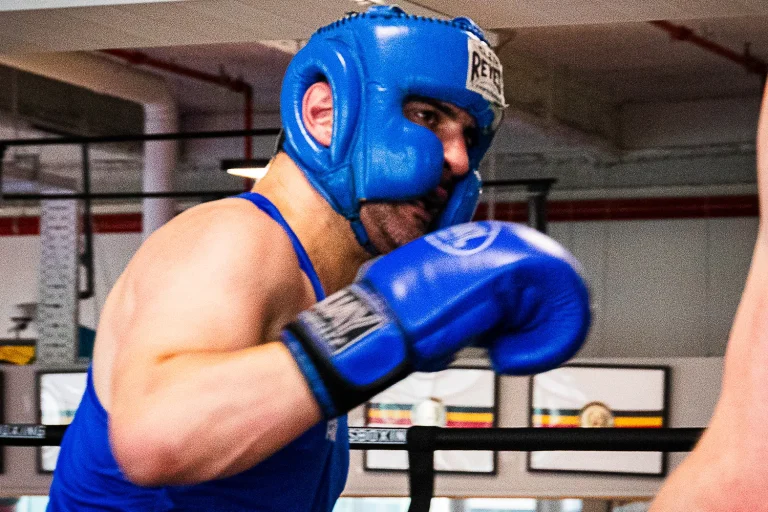
Let us start by defining sparring. In combat sports, sparring is a form of technical training between two athletes from the same team. You exchange punches, but without the power of a real fight. The goal is to try to land on the other person, your “sparring partner”, while protecting yourself at the same time.
So the aim of sparring is not to improve your physical capacities or work on your power; it is training designed to improve your technique. Sparring works your ring intelligence, your reflexes, your accuracy and your timing. You do not hit to knock someone out or to hurt them, as the goal of training is never to cause injuries.

A partner and a coach for sparring
As we have mentioned, sparring is technical training that requires two people. Your opponent is known in the sport as a sparring partner, and this is who you will be exchanging punches with. But beyond the sparring partner, it is important for the session to be supervised by a coach, especially when the athletes are not professionals.
There are two reasons for this. First, a coach can analyse the exchanges and spot each boxer’s strengths and weaknesses, so they can give you advice and recommendations to improve your technique. Second, when sparring, we tend to unintentionally ramp up the power under the pressure of the fight. The coach is there to keep both boxers in check and prevent needless injuries.
The ideal sparring session is therefore made up of a team of 3 people.
Protective gear during training
During technical training, it is important to protect both athletes. Even with punches thrown without much force, there is always a risk of injury. That is why a sparring session should never take place without proper protective gear. This means wearing headgear, as should your opponent. You should also use gloves that are thicker than competition gloves, so that the punches are better cushioned and hurt less.
It is the coach’s job to make sure that both you and your opponent are wearing your protective gear properly. Once you are protected, you can approach your session with complete peace of mind.
Choosing the right sparring partner
The sparring partner you train with needs to suit you, and to that end you should take certain criteria into account. To develop your technique properly, you need to work with an opponent of roughly the same weight as you. Whether in MMA, kickboxing or classic boxing, weight class matters in every combat sport.
Your sparring partner should not be more than 5 kg heavier or lighter than you, otherwise the training will be unbalanced. Likewise, your opponent should be at your level. If they are below it, the work will be far too easy and your technique will not improve. If, on the other hand, they are stronger, you will struggle to land anything and will not learn much from the exercise. So your partner in the ring should have a similar level to yours.

Your partner’s mindset matters too. Choose boxers who are ready to bring intensity to their training and who are at least as determined as you are. If you compete, choose athletes who compete as well.
Finally, it is important to choose a partner from your own club. Picking fighters from your club is a good way to make sure they will commit and bring the intensity you need to progress, because team spirit is there.
The techniques sparring helps you improve
Sparring lets you fine-tune many fighting techniques. The aspects worked on in a session vary and depend on how things are approached. For example, fighters can work as follows:
- One of the two sparring partners only boxes on the defensive, to improve their slips and blocks.
- Working on counters to learn to punch back faster and more effectively, with the right timing.
- Focusing on footwork to move in the right way.
- In disciplines such as mixed martial arts (MMA) or Muay Thai, putting the emphasis on low kicks and high kicks.
Sparring is therefore an important part of developing your technique in boxing or any other combat sport.
How much a sparring partner earns in professional boxing
Working as a sparring partner is a paid job in boxing and other combat sports. The pay for this kind of work varies enormously: it can be as little as 50 euros or climb to several thousand euros. Many factors make the difference, starting with how well known the boxer and the sparring partner are. A boxer fighting for a world title or an UFC athlete clearly pays far better than new pros fighting in much less prestigious championships.
French sparring partners generally earn between 500 and 800 euros a week, although this average can vary considerably depending on the factors mentioned above.
Would you like to take boxing classes in Brussels? Our boxing club is the place for you! Whatever your level, we offer a FREE first trial class. You can reach us on +32 473 29 42 99 or via the contact form.