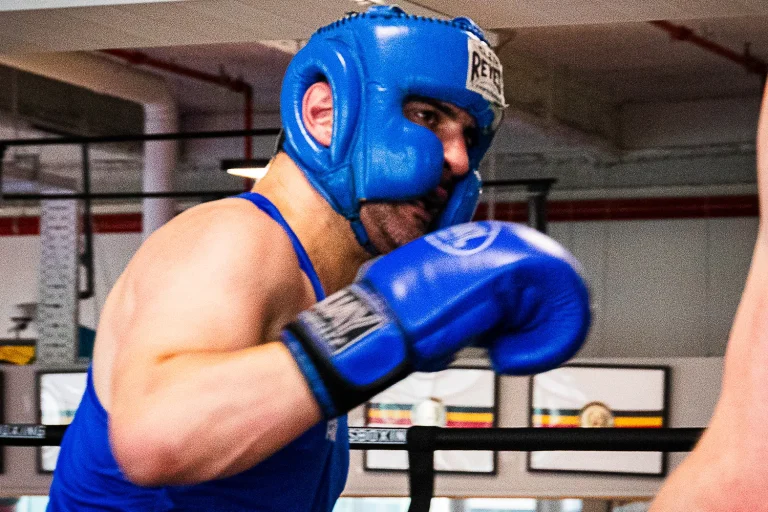




Boxing is a combat sport that demands a great many physical and mental qualities. Before taking it up, it’s important to ask yourself the right questions. After all, you need to be sure the noble art is right for you before you commit to it. In this article, we give you all the prerequisites for becoming an accomplished boxer. We also explain how to make progress in boxing.
The physical qualities needed for boxing
Boxing is a very complete sport that works many of the body’s muscles. It requires rock-solid physical fitness, and the noble art in particular demands great endurance. That said, you’ll be better equipped for this sport if you already have experience with similar physical activities. Here are the physical qualities needed for boxing:
Muscular strength
Boxing requires a lot of muscular power to hit hard and withstand your opponent’s punches. To develop your strength, follow a weight training and strength and conditioning programme.
Endurance
Since you have to last the rounds without slowing down, a good boxer needs real endurance. To build it, include cardiovascular exercise such as running, cycling or skipping rope.
Coordination and reactivity
Boxing also requires excellent coordination between arm and leg movements so you can slip punches and land your own attacks. It is therefore important to work on your coordination and reactivity with specific exercises, such as shadow boxing, pad work or sparring.
Flexibility and agility
To progress in English boxing, you need to be able to move freely and avoid your opponent’s punches. To work on flexibility, stretch regularly and do specific exercises such as yoga or stretching routines.

The mental qualities needed for boxing
On top of physical qualities, the noble art also demands important mental qualities. If this sport is right for you, you need to be disciplined and highly persevering. Here are the mental qualities needed for boxing.
Discipline
Progressing in boxing requires great consistency and rigour. It’s important to train regularly and follow your coach’s instructions in order to improve.
Perseverance
Patience and perseverance are the pillars of any sport, and of the noble art in particular. You will face many difficulties that you’ll have to overcome to get better at this sport.
Concentration
Boxing demands enormous concentration to anticipate your opponent’s movements and land your own attacks. To improve your concentration, practise meditation and breathing exercises.
Self-confidence
The noble art requires self-confidence to dare throw your attacks and withstand your opponent’s punches. So work on your mental preparation with visualisation and mental rehearsal exercises to strengthen your self-confidence.
Now that we’ve reviewed all the physical and mental qualities of a boxing champion, you should know that you don’t need to have all of them to start practising the noble art. You can take up the sport and develop them as you train! However, it’s important to understand that the noble art will inevitably lead you towards these qualities.
So the question is whether or not they match your deepest expectations and aspirations. If the answer is yes, you’re cut out to be a boxer!

The benefits of becoming a boxer
Practising boxing has significant benefits for both physical and mental health. Here are some of the benefits it can bring:
- improved fitness, including endurance, muscular strength, flexibility and coordination
- reduced stress, because intense sessions release endorphins, which create a feeling of well-being and help release tension
- greater self-confidence, because boxing lets you reach personal goals and improve on many levels
- better cardiovascular health, which reduces the risk of heart disease
- a stronger mind through concentration, discipline and mental resilience
- boxing helps you lose weight, burning up to 800 calories per hour
The ideal diet for a boxer
A healthy, balanced diet is essential to improve boxers’ performance and physical condition. Good nutrition for a boxer means:
- eating enough protein to build and repair muscle
- including complex carbohydrates to maintain energy levels and avoid energy slumps
- avoiding saturated fats to maintain a healthy weight and reduce the risk of heart disease
- favouring the unsaturated fats needed for post-workout recovery
- prioritising micronutrients such as vitamins and minerals to improve your performance in the ring
Tests to assess your aptitude for boxing
Before taking up this sport, it’s important to know whether you have the aptitudes needed to practise it. Here are a few tests you can do to assess your aptitude for the noble art:
- Endurance test: This sport demands great endurance. You can assess yours by running 5 km or doing a Cooper test.
- Strength test: Boxing demands a lot of muscular power. You can assess your strength with exercises such as push-ups, pull-ups or squats.
- Coordination test: The noble art demands excellent coordination between arm and leg movements. You can assess your coordination with exercises such as skipping rope or shadow boxing movements.
- Reactivity test: Boxing requires sharp reactions to respond quickly to your opponent’s attacks. You can assess your reactivity with exercises such as reaction games or light sparring drills.

If you’re passionate about boxing or want to test your abilities as a boxer, come and join our Boxing Club in Brussels. We’re a dynamic, passionate team dedicated to helping beginners and professionals reach their goals. Contact us now on +32 473 29 42 99 or via this form to find out more about our classes, our coaches and our outstanding facilities. And make the most of a free trial class to find out once and for all whether boxing is right for you!