



Muay Thai and Thai Boxing, two iconic martial arts from Thailand, captivate with their richness and intensity. Muay Thai, known as “the art of eight limbs”, combines fists, elbows, knees and shins, reflecting an ancestral warrior tradition. It is renowned for its rigour and effectiveness.
Thai Boxing, although closely related to Muay Thai, stands out for its adaptation to modern fighting rules. It keeps the essence of Muay Thai while incorporating contemporary techniques, resulting in a dynamic and technical style.
This article explores both disciplines, shedding light on their origins, techniques and the nuances that set them apart, while celebrating their shared cultural heritage.
Origins and History
Muay Thai: An Ancestral Heritage
Rooted in the history of Thailand, Muay Thai goes beyond the notion of sport to become a key part of the country’s cultural identity. Its origins date back to the kingdoms of Siam, where warriors practised it as a combat technique. Over the centuries, Muay Thai has transformed into a national sport, respected and practised worldwide. Its techniques, shaped by history and cultural influences, bear witness to a rich and complex past.
Thai Boxing: Modernity and Adaptation
Thai Boxing, often seen as a modernised version of Muay Thai, has developed into a discipline in its own right. Inspired by traditional Muay Thai, it has adapted to international boxing standards. More recent, Thai Boxing quickly won over combat sports fans by blending the tradition of Muay Thai with modern techniques.
Parallel Paths
Although they share common roots, these two martial arts have evolved differently. Muay Thai preserves its centuries-old traditions, while Thai Boxing embraces more global influences. This coexistence of tradition and modernity defines their unique identity, making each of them not just a sport, but also a living cultural heritage.
Techniques and Fighting Styles

Signature Muay Thai Techniques
With its reputation as a complete combat sport, Muay Thai stands out for its use of eight points of contact: fists, elbows, knees and shins. This approach allows for an impressive variety of offensive and defensive techniques. Muay Thai fighters are known for their endurance, their strength and their ability to land powerful blows. Techniques such as downward elbow strikes and leg sweeps are emblematic of the style, reflecting a combination of raw power and surgical precision.
Techniques Specific to Thai Boxing
Thai Boxing, while inspired by Muay Thai, focuses on more refined techniques adapted to the rules of modern boxing. Fighters rely more on their fists and feet, paying particular attention to mobility and agility. Thai Boxing techniques are often faster and less focused on brute force, favouring speed and tactics over sheer power.
Comparing the Fighting Styles
Comparing Muay Thai with Thai Boxing reveals notable differences in their approach to fighting. Muay Thai, with its warrior heritage, favours strength and toughness, while the more modern Thai Boxing values speed and technique. This distinction is reflected in fight strategies: Muay Thai relies on endurance and the ability to absorb and deliver powerful blows, whereas Thai Boxing focuses on fluid movement and precise striking. These differences make each discipline a unique art, with its own challenges and its own beauty.
Rules and Competition Formats
Standard Muay Thai Rules
True to its traditional roots, Muay Thai follows a set of rules that emphasise endurance and technique. Fights usually consist of five three-minute rounds, with one-minute breaks. Permitted techniques include the use of fists, elbows, knees and shins, allowing a wide variety of offensive combinations. Headbutts are not allowed. Judges score fighters on their aggression, technique, ring control and ability to inflict damage on their opponent.
Thai Boxing Rules
Adapted to international standards, Thai Boxing has slightly different rules. Fights are often shorter, with rounds that may vary depending on the organisation. Thai Boxing emphasises striking technique, especially the use of fists and feet. Although elbow and knee strikes are sometimes allowed, they are generally less prominent than in traditional Muay Thai. Judging criteria focus on accuracy, defence, agility and strategy.
Differences in Competition Formats
The main difference between Muay Thai and Thai Boxing competition formats lies in their approach to fighting. Muay Thai favours a style in which toughness and the ability to take punishment are as important as the ability to dish it out. Thai Boxing, on the other hand, favours a more dynamic and faster style, where mobility and technical precision are essential. These differences show in the way fights are judged and in the overall atmosphere of competitions, with each discipline offering a unique experience for fighters and spectators alike.
Training and Preparation Muay Thai vs Thai Boxing

Training Approaches in Muay Thai
In the world of Muay Thai, training is serious business that demands total dedication. Practitioners often start their day before dawn with running sessions to build endurance. Training includes strength exercises, striking drills on heavy bags and pads, and rigorous sparring. The emphasis is on developing power and toughness, both essential in Muay Thai fights. Coaches, often former fighters, pass on their knowledge with a rigour that forges not only physical skills but also a mind of steel.
Training Methods in Thai Boxing
Thai Boxing draws on Muay Thai training methods while adding a modern touch. Sessions are varied, including Western boxing techniques and general conditioning exercises. The focus is on speed, agility and accuracy, with specific drills to improve reactivity and coordination. Sparring sessions are also crucial, allowing boxers to fine-tune their techniques and adapt their style to different opponents.
Comparing Training Regimes
- Muay Thai: focus on raw strength and endurance for long fights.
- Thai Boxing: priority on speed and technique, with a strategic approach to fighting.
- Similar intensity and rigour in training.
- Different methods and goals, reflecting the particularities of each discipline.
Equipment and Gear
Equipment Used in Muay Thai
- Muay Thai shorts for optimal freedom of movement.
- Boxing gloves to protect the hands.
- Hand wraps and shin guards for added safety.
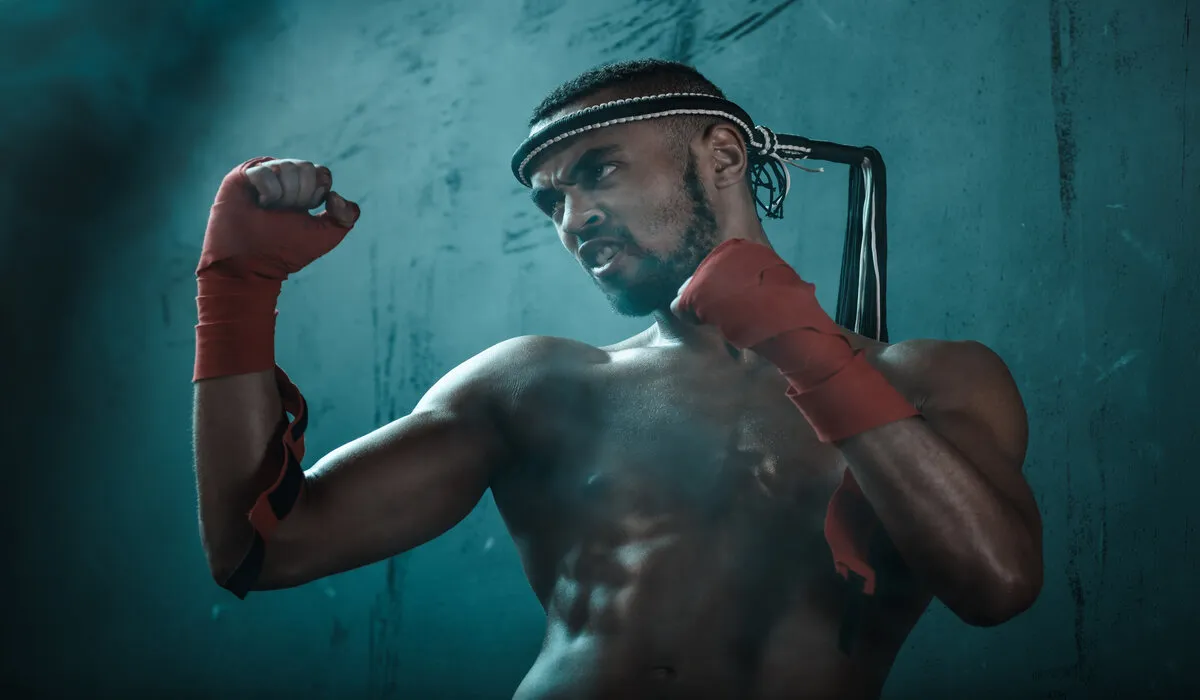
- Mongkon (headband) and pra jiad (armband) for the traditional and spiritual aspects.
Thai Boxing Gear and Equipment
- Shorts similar to Muay Thai ones, in a variety of designs and materials.
- Lighter boxing gloves, suited to speed and precision.
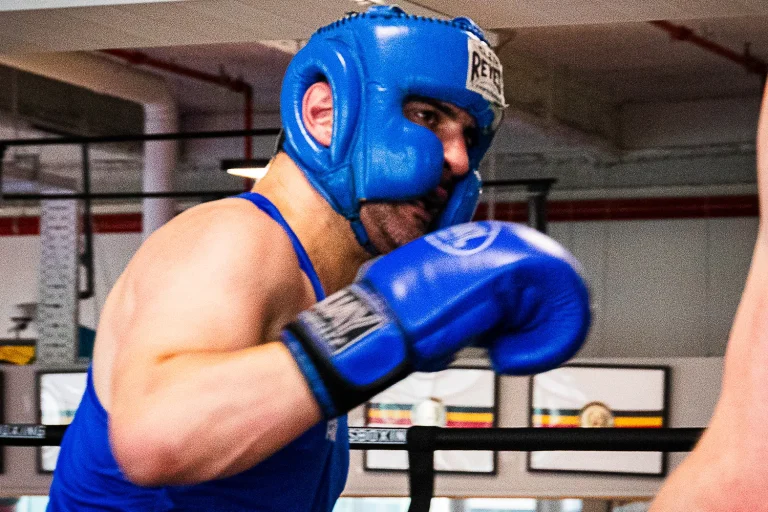
- Frequent use of extra protection such as headguards, especially in training.
Similarities and Differences
- Common elements: gloves and shorts, with variations in design and materials.
- Muay Thai: traditional elements such as the mongkon and pra jiad are kept.
- Thai Boxing: a trend towards more modern and practical equipment, reflecting adaptation to contemporary standards.
Cultural and Popular Impact

Muay Thai in Thai Culture
Muay Thai is an essential part of Thai cultural identity. Its origins go back centuries, to a time when it was practised by Siamese warriors. Today, it is not only a national sport but also a key element of cultural celebrations and education in Thailand. Muay Thai fighters are regarded as national heroes, and rituals such as the Wai Khru Ram Muay, a dance of respect performed before fights, bear witness to how deeply it is rooted in tradition and spirituality.
Thai Boxing’s Influence Around the World
Although more recent, Thai Boxing has quickly won over a global audience. It has become popular with a wide range of practitioners, drawn by its effectiveness and technique. In gyms all over the world, it is taught as a way to stay fit and develop self-defence skills. Its growing presence in international competitions and the media has cemented its reputation as a leading combat sport.
Comparing Their Cultural Impact
While Muay Thai is deeply rooted in Thai tradition, Thai Boxing has adapted to become a global sport. Muay Thai is often associated with deep cultural and historical values, whereas Thai Boxing is seen as a more accessible discipline suited to an international audience. This divergence shows how each art has evolved and found its place in different cultural contexts, while keeping a link to its Thai roots.
Using Muay Thai and Thai Boxing for Self-Defence
Muay Thai and Thai Boxing are both recognised for their effectiveness in self-defence, each bringing its own techniques and strategies.
Muay Thai for Self-Defence:
- Use of the eight points of contact for all-round defence.
- Elbow and knee techniques for powerful strikes.
- Teaching of spatial awareness and self-confidence.
Thai Boxing for Self-Defence:
- Emphasis on speed, agility and precision.
- Effective evasion and counter-attack techniques.
- Development of physical fitness for faster reactions.
Popularity in Fitness and Personal Training
Muay Thai and Thai Boxing are also popular in the fitness world, offering a full-body workout:
- A combination of cardio, strength and flexibility.
- Classes available in many gyms.
- Intense training for a physical and mental challenge.
Conclusion
In conclusion, Muay Thai and Thai Boxing are far more than mere sporting disciplines; they reflect a rich cultural tradition and a constant evolution in the art of fighting. While Muay Thai draws on an ancestral heritage to offer a complete and powerful approach to combat, Thai Boxing adapts these techniques to a modern context, with an emphasis on speed and tactics.
Together, these two Thai martial arts offer a full spectrum of skills in fighting, self-defence and fitness, while conveying values of discipline, respect and perseverance. Whether you are a passionate practitioner or an admiring spectator, Muay Thai and Thai Boxing continue to inspire and fascinate with their depth, intensity and beauty.
Muay Thai and Thai Boxing are Thai martial arts that offer much more than just a sport. They represent a fusion of tradition and modernity, combining strength, technique and discipline. If you are in Brussels and would like to discover these fascinating disciplines, our English Boxing club welcomes you. Whatever your level, we invite you to a FREE trial class. Contact us on +32 473 29 42 99 or via our contact form for more information.