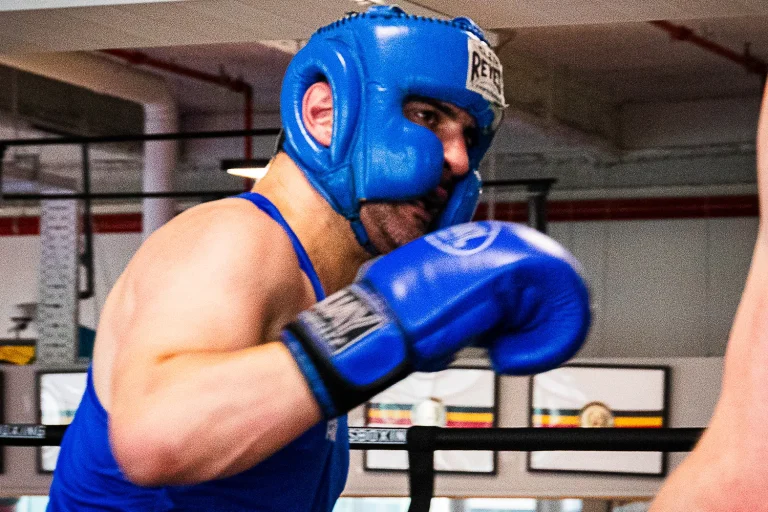





The uppercut, an iconic boxing punch, stands out for its power and elegance. Dating back to the early days of modern boxing, this upward punch targets the opponent’s chin or torso, drawing its force from gravity and body movement.
Its popularity rests on its effectiveness at close range and its ability to break through the opponent’s guard. A well-placed uppercut can turn a fight around, illustrating the fusion of strength, agility and intelligence that defines boxing. This punch is not just an attack, but an expression of the boxer’s technical and strategic mastery.
Uppercut Technique
To master the uppercut, a boxer must first understand its mechanics. The movement starts with a slight bend of the knees, creating a solid base. The uppercut’s power comes from this foundation, where the legs, trunk and hips work in harmony to generate upward force. Like a released spring, the boxer’s fist rises in a precise arc, aiming for the vulnerable spot under the opponent’s chin or on their body.
There are two main variations of the uppercut: the left and the right. The left uppercut, often faster but less powerful, is ideal for catching the opponent by surprise and creating an opening for heavier punches. The right uppercut, on the other hand, is a finishing blow, delivering brutal force capable of turning the fight around.
The uppercut is not just a punch; it is a statement. It speaks of the boxer’s finesse, their ability to read the game and anticipate their opponent’s movements. It is a punch that demands not only physical strength but also tactical intelligence and a deep understanding of the rhythm of the fight. In the following chapters, we will explore how boxers can use the uppercut strategically, how they can build it into their combinations and how to perfect it through training.
Using the Uppercut Strategically

The Right Moment for the Uppercut
In the boxing ring, the uppercut is not just a punch; it is a strategy. Its effectiveness lies in timing. The ideal moment for an uppercut is often when an opponent drops their guard or is moving forward. It is in these fleeting moments that the uppercut, like a bolt of lightning, can strike with devastating effect.
The Art of Combining the Uppercut
The uppercut finds its place in a ballet of punches, a symphony of calculated movements. It is often preceded by jabs or hooks that serve to disorient the opponent. In this dance, the uppercut is the final blow, the climax of a series of attacks. It fits into a broader strategy, where every punch sets up the next.
The Uppercut: A Masterstroke
Using the uppercut in boxing is a testament to the boxer’s intelligence and cunning. It is not a punch to be thrown lightly, but rather a weapon to be deployed with discernment. A well-placed uppercut can not only unbalance the opponent but also change the course of the fight, leaving a lasting impression on spectators and an indelible mark on the history of the bout.
Training and Perfecting the Uppercut
Building Uppercut Power
Away from the spotlight, in the training gym, the boxer shapes the power of their uppercut. Here are the key elements for developing an effective uppercut:
- Strength Exercises: Heavy bag work and weight training to build strength.
- Precision Practice: Targeted training to improve the accuracy of the punch.
Building the Uppercut into Your Training Routine
The uppercut demands more than strength; it requires refined technique and smooth integration into punch combinations:
- Shadow Boxing: Perfecting the movement so that it becomes natural and instinctive.
- Partner Drills: Working on timing and coordination in real situations.
Legendary Uppercuts in Boxing History
Boxing history is full of examples where the uppercut left an indelible mark. For example, Mike Tyson’s fight against Trevor Berbick in 1986 is famous for Tyson‘s devastating uppercut, a punch that contributed to his KO victory and his reputation for raw power. Another memorable moment is Lennox Lewis‘s uppercut against Vitali Klitschko in 2003, a punch that marked the beginning of the end for Klitschko in that fight.
These punches are not just spectacular; they are often decisive. George Foreman‘s uppercut against Joe Frazier in 1973 is a perfect example. Foreman used the uppercut to dominate Frazier, literally lifting him off his feet several times, which went a long way towards his KO victory.
Uppercut Safety and Rules in Boxing

Safety First
In the intense world of boxing, the uppercut, for all its beauty and effectiveness, demands particular attention to safety. Boxers learn very early on that mastering this powerful punch requires strict adherence to proper technique to avoid injury, both to themselves and to their opponents. Uppercut training involves a deep understanding of biomechanics and careful application to protect the fighters’ physical well-being.
Competition Rules
In the ring, the uppercut is subject to strict rules. Professional and amateur boxing organisations ensure that this punch is used in accordance with established standards, guaranteeing a fair and safe fight. Punches below the belt, for example, are forbidden, which includes improper use of the uppercut. Referees keep a close eye on these details, making sure that sportsmanship and safety are always maintained.
Conclusion: The Essence of the Uppercut in Boxing
Much more than a simple punch, the uppercut embodies the art of boxing, blending raw power with tactical precision. This iconic punch, which has shaped many historic fights, symbolises boxers’ technical mastery and determination. It remains a pillar of training and fight strategy, representing a constant challenge for practitioners and continuing to inspire respect and admiration. As a reflection of excellence in the noble art of boxing, the uppercut remains a fundamental element that contributes to the richness and ongoing evolution of the sport.