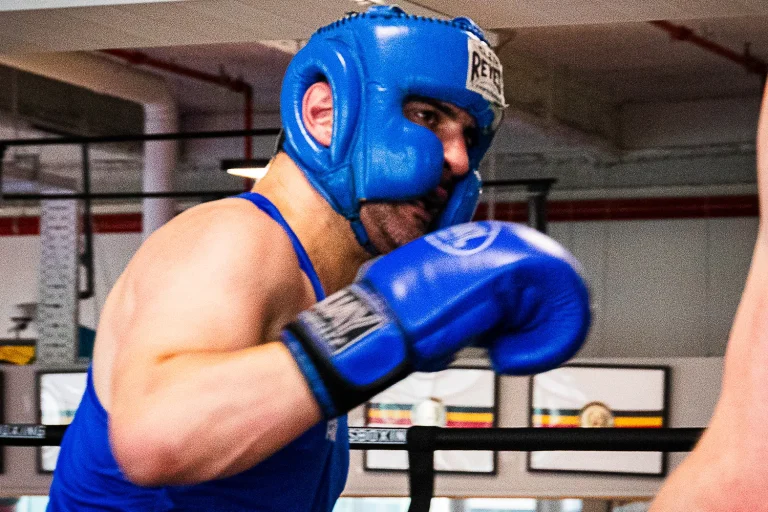




In combat sports such as boxing, athletes compete in different divisions according to their weight. A weight difference that is too great would be unfair and would penalise the lighter athlete in this kind of sport, which is why fighters are split into classes. Boxing has one of the largest numbers of weight classes. In this sport, a difference of less than 2 kg is enough to move up or down a division. Discover the different weight classes in boxing right now.
17 weight classes in boxing
There are no fewer than 17 weight classes recognised by world boxing bodies. Boxers are grouped by weight so that they fight and train with athletes of a broadly similar build. But a boxer often competes in several different divisions as his weight changes. Because the classes are only slightly apart, it is not unusual to see boxers fight in 3 or even 4 different weight classes. Some divisions are known as traditional, meaning they have always existed throughout the history of boxing, while others were added later.

Strawweight, the lightest division
The strawweight division, also called minimumweight, is capped in boxing at 104 pounds, just over 47 kg. The division was introduced by many organisations between 1987 and 1990, including the WBA, the WBC and the WBO. Strawweight is therefore one of the newest divisions in professional boxing. Champion Ricardo Lopez is one of the most talented boxers in this class, with no fewer than 51 wins and a single defeat in his professional career.
Flyweight
The limit is 108 pounds for light flyweights and 112 pounds for flyweights. The BBBC was the first body to recognise this division, back in 1911. Light flyweight was abolished in 1929, then reinstated by the WBC in 1970. The same body hosted the first super flyweight (115 pounds) title fight. Boxers such as Jimmy Wilde and Pancho Villa are icons of these divisions.
Bantamweight
Bantamweight is capped at 118 pounds, and super bantamweight at 122 pounds. The first bantamweight fight took place in 1889, between Chappie Moran and Ray Lewis, for the world title. At the time the bantamweight limit was 110 pounds, and the governing bodies raised it to its current limit in 1910.
Featherweight
Above bantamweight comes featherweight. Boxers in the featherweight division must weigh under 126 pounds, and under 130 pounds for super featherweight. George Dixon, a multiple world champion in this division, is probably the most talented professional in this class, along with Sandy Saddler and Salvador Sanchez. These boxers had impressive professional and amateur careers, with several fights that have gone down in history.
Lightweight
Lightweight is one of the eight traditional divisions of the boxing game. The weight limit is set at 135 pounds, and 140 for super lightweight. These two divisions are packed with talented boxers whose professional careers are simply impressive.
Today, names such as Vasyl Lomachenko and Gervonta Davis come to mind. Almost every generation in this division has produced one or more boxers with exceptional careers who left their mark on the world of boxing.
Welterweight, a very famous division
Welterweights are among the most popular fighters in boxing. The level here has always been very impressive, with boxers such as Terence Crawford, Sugar Ray Robinson and the unbeaten, unbeatable Floyd Mayweather. Competition has always been fierce at welterweight, across all the governing bodies. The limit is 147 pounds for this division, and 154 pounds for super welterweight. Felix Trinidad is the boxer who held his world title the longest, for almost 7 years.
Middleweight
The middleweight division is capped at 160 pounds, followed by super middleweight, capped at 168 pounds. This is one of the oldest divisions in the boxing game, with championship titles dating back to the 1840s. The division even held a bare-knuckle championship in 1867. The first Olympic champion in this class was Charles Mayer. Many great boxers have fought in this division,such as the unforgettable Sugar Ray Robinson, 5-time world middleweight champion, the first to win the same title so many times, with punching power that almost always knocked his opponents out.

Light heavyweight
The light heavyweight division is capped at 175 pounds, just over 79 kg. Holyfield, Patterson and Michael Spinks are iconic boxers in this division, world champions with several governing bodies during their careers. Bernard Hopkins, however, is most likely the best in history, with an impressive amateur and, above all, professional career in the ring.
Cruiserweight
Cruiserweights are limited to 200 pounds, roughly 91 kg. Ukraine’s Oleksandr Usyk is an example of a boxer who has excelled in the ring in this division. The WBC was the first body to introduce and recognise this division, in the late 1970s.
Bridgerweight, a new division
Not many of you will have heard of this division. And for good reason: it is brand new in the world of boxing. Covering weights between 200 and 224 pounds, it has so far only been introduced by the WBC, in 2020.
Heavyweight
The top division is of course heavyweight, which has no upper weight limit. The lower limit, however, has changed considerably, because boxers’ builds have too. In the 1800s, a 77 kg boxer could be considered a heavyweight. In France, Georges Carpentier is the best-known boxing champion, a multiple world champion, including in lower divisions. He is one of the boxers who did most to bring honour to French boxing around the world.
The other boxing weight classes
There are other boxing weight classes that have not been covered here. They are the following 6:
- Light flyweight, capped at 108 pounds
- Super flyweight, capped at 114 pounds
- Super bantamweight, up to 122 pounds
- Super featherweight, up to 130 pounds
- Super welterweight, up to 154 pounds
- Super middleweight, capped at 168 pounds
Would you like to take boxing classes in Brussels? Our boxing club is made for you ! Whatever your level, we offer you a FREE first trial class. You can reach us on +32 473 29 42 99 or via the contact form.