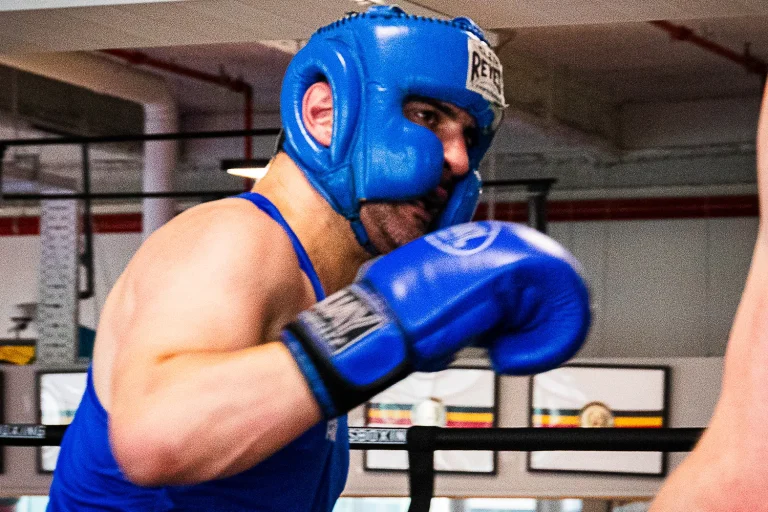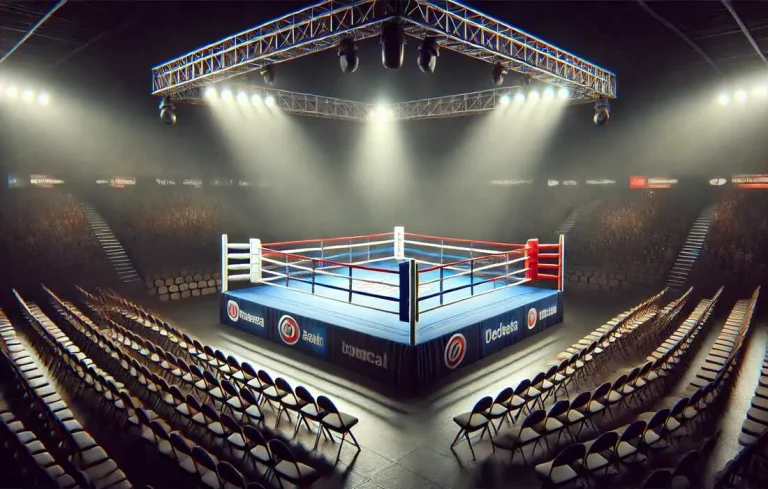




Boxing is without doubt one of the oldest sports in the world. In the beginning, people spoke of pugilism or pankration. Works of art from the Sumerian and Egyptian civilisations, dating back more than 3000 years before Christ, show fight scenes that prove boxing has existed ever since. The practice has of course evolved a great deal since then. Although English boxing is the king of the disciplines, it has many offshoots, such as savate French boxing, Muay Thai and kickboxing.
Discovering the ancestor of boxing : pugilism

Men have been challenging each other to duels for around 5000 years. We don’t know exactly what the combat sports practised by the Egyptians or Sumerians were called. We do know, however, that pugilism and pankration were invented by the Greeks. Pankration is more closely associated with wrestling, or even MMA. Indeed, the sport allowed every kind of blow except biting and eye-gouging. The fighters were completely naked, with no protection whatsoever.
The ancestor of boxing is pugilism, since only the fists were used. The first Olympic champion in the discipline was Onomastus of Smyrna, who won his title in 688 BC. The first great champion was Tisandrus of Naxos, who was crowned Olympic pugilism champion 4 times, in 572, 568, 564 and 560 BC. In ancient Greece, pugilism was a national sport for 800 years.
The bouts were particularly violent. To hit harder without hurting themselves, boxers wrapped their fists in leather straps. The Romans even ended up covering their fists with metal straps, turning it into a circus game long before the gladiators.
There were no weight classes. Nor was there any time limit or rounds. Fights were therefore long, sometimes very long, and only ended with a submission or a KO. Deaths among competitors (in the Greek version) were very rare: it was already a sport. In the Roman version, on the other hand, fighters wore metal gloves, which caused far more deaths.
When a fight dragged on for too long, the fighters were separated at its peak. The first fighter to strike was chosen by drawing lots, and was considered the favourite of the gods. He was allowed to land the first blows on his opponent, who had no right to defend himself or dodge the punches.
Then the second fighter would in turn strike his opponent in the same way, until one of them could no longer get up. This system had nothing in common with the points scoring we know today.
The first signs of English boxing
The concept of modern boxing emerged around the middle of the 19th century. At that time, illegal fights were organised by matchmakers to win bets, and the police often came to break them up.
In 1865, a journalist with a passion for pugilism wrote the rules of English boxing. There are 15 of them, known as: the Marquess of Queensberry Rules. It was thanks to the Marquess’s fame that these rules spread throughout the United Kingdom, finally coming into force in 1891.
These rules made fights less violent, but also faster and more exciting. Over time the game improved and, little by little, boxing went from an illegal gambling game to a recognised sport. It even became one of the first professional sports of the modern era. English boxing as we know it today has seen greats of the sport such as Muhammad Ali.
The rules of English boxing today

In 1865, the Marquess of Queensberry took the initiative of introducing a set of rules designed to reward agility rather than strength. Among other things, they ban hitting an opponent who is down or unable to fight, bare-knuckle fighting and fights to the finish. A points scoring system began to emerge.
Today, boxers compete by weight class (strawweight, flyweight, cruiserweight, super heavyweight…). They fight several 3-minute rounds, with a one-minute rest in between, during which they can get treatment, drink and wipe their face.
How is an English boxing match won?
At the Olympic Games, English boxing bouts are fought over 3 rounds of 3 minutes. For amateur fights open to betting, the number of rounds may vary. A boxer can win a fight in several ways :
- When the opponent retires;
- By KO : when a boxer is down with at least one knee on the canvas or fails to get up within 10 seconds, the referee declares a KO;
- By technical KO (or TKO) : the referee rules that the boxer is no longer able to defend himself;
- On points : if the rounds end without a KO or retirement, victory goes to the boxer who scored the most points.
What you need to know about punches in English boxing
The main aim of any boxing match is to KO the opponent. This means the punch has to be so powerful that the brain hits the skull, causing a brief daze. The aim of the punches is therefore to destabilise the opponent and knock them out.
A few examples of punches in English boxing:
- Uppercut : an upward punch that snaps the head violently backwards;
- Hook : a circular punch;
- Jab : a straight punch thrown along the centre line, with more or less momentum;
- Short jab: a punch to the lower chest, thumb pointing up.