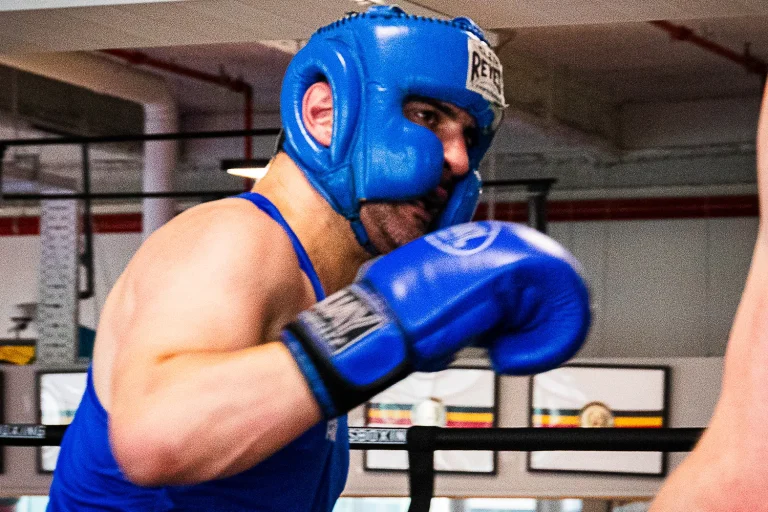





Do you box and want to improve your performance in the ring? Then strength and conditioning classes are an essential key to reaching that goal. Strength training is just as suitable for women. These classes play a crucial role in your boxing by helping you optimise your movements, increase your power and reduce the risk of injury.
The link between strength training and boxing performance is undeniable. The stronger your muscles, the better you will be able to hit hard, take punches and maintain good posture throughout the fight. Targeted exercises also help improve your speed, agility and endurance.
To get the best results, it is important to understand the key principles of strength training for boxers. Using equipment such as resistance bands can be very beneficial, as they provide progressive resistance that simulates boxing-specific movements.
By working regularly on your muscular strength and power, you will maximise your performance in the ring and increase your chances of success. So don’t wait any longer: get to work right now!
The benefits of strength training for boxing

Strength training plays an essential role in boxing. It offers many benefits that can improve boxers’ performance in the ring. In this article, we will explore the main benefits of strength training for boxing.
More punching power thanks to strength training classes
One of the major benefits of strength training for boxing is greater punching power. By developing their physical strength, boxers are able to deliver more powerful and more effective punches. This can make all the difference in a fight, because every punch counts.
To strengthen the muscles used when punching, there are several specific exercises to prioritise:
- Squats: this exercise mainly works the legs and glutes, two muscle groups that are essential for generating maximum power.
- Push-ups : they work the upper body, especially the arms, shoulders and core. Good stability and greater strength in these areas are essential for delivering hard-hitting punches.
- Abs: a strong core is crucial in boxing to transfer the energy generated by the lower body to the upper body when throwing a punch.
By including these exercises in their regular training programme, boxers can see a clear improvement in their punching power.
Lower risk of injury thanks to a stronger, more balanced body
Another important benefit of strength training for boxing is a lower risk of injury. A stronger, more balanced body is better prepared to absorb shocks and impacts during fights. Strength training classes will therefore be a great help in your fights or sparring sessions.
By working all the muscle groups, boxers strengthen their joints, tendons and ligaments, which contributes to better overall stability. This helps prevent common injuries such as sprains, muscle tears and even fractures.
What’s more, a well-trained body recovers faster after intense effort. Strong muscles are less prone to fatigue and cramps, allowing boxers to maintain their performance throughout a fight.
Greater endurance and resilience in fights
Finally, strength training for boxing helps improve endurance and resilience in fights. Good physical condition is essential to last several rounds without fading.
Strength training programme for boxers with NBSBoxing in Brussels

When it comes to strength training for boxers, it is essential to plan a training programme suited to the specific demands of the sport. Boxing requires a combination of strength, power and endurance, and a good weight training programme can help boxers improve their overall fitness and maximise their performance in the ring.
Compound exercises to work several muscle groups at once
Compound exercises are particularly beneficial for boxers because they work several muscle groups at the same time. These exercises allow boxers to develop functional strength that translates directly into their movements in the ring. Here are a few examples of compound exercises that can be included in a strength training programme for boxers:
- Squats: this exercise mainly works the leg muscles, but also engages the core and back muscles.
- Deadlifts: this exercise strengthens the whole body, with an emphasis on the leg, back and shoulder muscles.
- Push-ups: although often seen as a chest exercise, push-ups also work the arm, shoulder and core muscles.
These exercises can be built into a programme with different sets and reps depending on each person’s level. It is recommended to start with lighter weights and gradually increase the load to avoid injury.
Gradual progression to avoid plateaus and maximise results
To get the best results from strength training, it is essential to progress gradually. This means steadily increasing the intensity, volume or difficulty of the exercises over time. By doing so, boxers can avoid plateaus and keep stimulating their muscles for continued growth.
A strength training programme for boxers can be divided into different phases, each with its own specific goals. For example:
- Strength phase: this phase focuses on building raw strength throughout the body. Boxers can perform exercises such as squats, deadlifts and push-ups with relatively heavy loads and fewer reps.
- Muscular endurance phase: this phase aims to improve boxing-specific muscular endurance.
Specific training to improve punching power
When it comes to strength training for boxing, it is essential to focus on specific exercises that improve the power and effectiveness of your punches. Here are a few key points to keep in mind during your training:
Using explosive exercises such as jump squats or plyometric push-ups
Explosive exercises are essential for developing the strength and explosiveness needed for powerful punches. Jump squats are an excellent way to build leg strength while also working on explosiveness. When doing jump squats, make sure you keep good posture and push hard on every jump.
Plyometric push-ups are also very effective for strengthening the upper-body muscles used when punching. To do this exercise, start in a normal push-up position, then push up with enough force to lift your hands off the floor before landing back in the starting position. This will help build power in your arms and chest.
Working on range of motion, speed and coordination
To improve your punching power, it is important to work on the range, speed and coordination of your movements. You can do this by incorporating a variety of exercises into your training routine.
For example, lunges with a twist are an excellent exercise for strengthening the leg muscles while improving coordination and stability. Start with a classic lunge, then add a rotation of the upper body towards the side of the front leg. This will help you develop better punching power by using your whole body.
Incorporating boxing-specific techniques, such as uppercuts or hooks
To strengthen your punches, it is also important to incorporate boxing-specific techniques into your training. Uppercuts and hooks are two examples of punches that can be particularly powerful when executed correctly.
When practising these punches, focus on executing the movements precisely. Work on range and speed while keeping good posture and properly engaging your hips and shoulders. By incorporating these specific techniques into your training, you will develop not only your punching power but also your overall agility and coordination.
Upper-body strength training for boxing

Strength training is essential for any boxer who wants to improve their performance in the ring. In this article, we will focus on strengthening the upper body, i.e. the arms, shoulders and chest. We will cover various exercises and methods suited to all levels.
Exercises targeting the arm, shoulder and chest muscles
To effectively strengthen the upper body for boxing, it is important to focus on specific exercises. Here are a few examples of exercises that target these key muscle areas:
- Weightlifting: Lifting weights is a classic exercise for building strength in the arms and shoulders. It can be done with dumbbells or a barbell, depending on your preference.
- Push-ups: Push-ups are a versatile exercise that mainly works the upper-body muscles, including the arms, shoulders and chest. They can be done using your own body weight or by adding extra resistance, for example with a weighted vest.
- Pull-ups: Pull-ups are excellent for building strength in the back and arms. If you can’t yet do a full pull-up, you can start with easier variations such as assisted pull-ups or using a resistance band.
Using dumbbells, resistance bands or body weight depending on your level
When it comes to strength training for boxing, it is important to choose the right tools and loads for your level. Here are a few options to consider:
- For beginners: If you are new to strength training, you can start by using your own body weight for exercises such as push-ups, squats and lunges. This will build a solid foundation before you add extra load.
- For intermediates: Once you have built some strength with your body weight, you can add light dumbbells or resistance bands to increase the intensity of the exercises. This will stimulate your muscles further and promote their development.
- For advanced athletes: More advanced athletes can use heavier dumbbells or other specialised equipment such as kettlebells to keep progressing in their strength training.
Lower-body strength training for boxing
When it comes to strength training for boxing, it is essential not to neglect the lower body. The legs and glutes play a crucial role in boxing movements, providing power, explosiveness and stability. Here are a few important points to consider to effectively strengthen your lower body for boxing.
Why strengthening the legs and glutes matters in boxing movements
The legs are the foundation on which every boxing technique is built. They provide the energy needed to throw powerful punches, slip your opponent’s attacks and move quickly around the ring. Strong thigh, calf and glute muscles improve the body’s overall strength during fights.
By working specifically on lower-body strength, you can increase your punching power while reducing the risk of injuries caused by muscle imbalances. Targeted exercises such as squats, lunges and jumps can be built into your training routine to develop the strength and explosiveness needed in boxing.
Exercises such as squats, lunges or jumps to improve power and explosiveness
Squats are a versatile exercise that works several muscle groups at once, including the quads, hamstrings, glutes and calves. They strengthen not only your legs but also your core, which is essential for maintaining good posture in fights. Try including different types of squats in your training routine, such as classic squats, jump squats or weighted squats.
Lunges are also very beneficial for lower-body strength in boxing. They mainly work the quads and glutes while improving balance and stability. You can do forward lunges, side lunges or reverse lunges to target different muscles and develop better coordination.
Jumps are another effective exercise for improving the power and explosiveness of your lower body. Box jumps are particularly well suited to boxing because they simulate the movement of stepping up into the ring after a quick drop. They strengthen your legs while developing your ability to generate force quickly.
Developing the core and pelvis for better boxing performance

Strength training is essential for boxers looking to improve their performance in the ring. Among the key areas to work on, the core and pelvis play a crucial role in the stability, coordination and power of your movements. In this article, we will explore why developing these muscles matters for better boxing performance.
Strengthening the abs, obliques and lower back for better stability
When it comes to strengthening the core for boxing, it is important to target the abs, obliques and lower back muscles. These muscles are responsible for keeping the body stable during fast, dynamic movements in the ring. Strong abs also improve your ability to absorb punches while maintaining a protective posture.
To develop these muscles, there are several effective exercises, such as:
- Planks: this exercise involves holding a static position on your forearms or hands for several seconds or minutes. It works the abdominal muscles intensely.
- Twists or rotations: these exercises involve rotating the torso, which strengthens the obliques. For example, you can do rotations with a light weight or use a dedicated machine.
- Stretching: although often neglected in boxing training, stretching can help loosen the core muscles and improve mobility, which is essential for fluid movement in the ring.
Improving coordination between the upper and lower body in boxing movements
Coordination between the upper and lower body is crucial for optimal boxing performance. It allows you to string punches together fluidly, generate more power and move faster. Developing the core and pelvis plays a key role in this coordination.
To improve this coordination, it is recommended to combine core-specific exercises with dynamic leg movements:
- Skip rope to work on your rhythm and timing.
- Do exercises that work both the upper and lower body, such as burpees or squats with a twist.
- Work on your balance with single-leg exercises such as lunges with a twist.
Conclusion on strength training for boxing
In conclusion, strength training is essential for boxers who want to improve their performance in the ring. The benefits of strength training for boxing are many and include greater punching power, better endurance and a lower risk of injury.
A strength training programme designed for boxers can be put in place to specifically target the muscles used in fights. This can include exercises such as squats, bench presses, pull-ups and lunges, which strengthen both the upper and lower body.
To improve punching power, specific training can be added to the programme. This can include plyometric exercises such as box jumps or work on heavy bags. These exercises help improve the speed and power of your punches.
Upper-body strength is also crucial in boxing. Exercises such as pull-ups, push-ups and bicep curls can help build arm strength, which makes it easier to work on jabs, hooks and uppercuts.
Likewise, lower-body strength is important for generating good stability and power when moving around the ring. Squats, lunges and jumps can be included in your training to work these key muscles.
Finally, don’t neglect developing the core and pelvis, as they play a crucial role in generating force during rotational movements. Exercises such as planks, crunches and Russian twists can be added to strengthen these muscles.
In conclusion, strength training is an essential part of boxing training. It improves punching power, endurance and stability. For the best results, it is recommended to consult a coach or a healthcare professional who specialises in the field.
Join us
Strength training is essential to becoming a good boxer. And you need the best people to support you in your training, so come and try our boxing gym! Sign up now and you can enjoy a free first training session. You will be guided by our best coaches. Don’t wait any longer, get in touch on +32 473 29 42 99 or via this contact form! You will find us in the Mint gallery in Brussels.
FAQ
What are the benefits of strength training for boxing?
Strength training for boxing has several benefits, including greater punching power, better endurance and a lower risk of injury.
Which exercises can be included in a strength training programme for boxers?
A strength training programme for boxers can include exercises such as squats, bench presses, pull-ups and lunges to strengthen both the upper and lower body.
How can specific training improve your punching power?
To improve your punching power, you can add plyometric exercises such as box jumps or work on heavy bags, which help improve the speed and power of your punches.
What are the best exercises to strengthen the upper body for boxing?
To strengthen the upper body for boxing, exercises such as pull-ups, push-ups and bicep curls can be included in your training to build arm strength.
Which exercises are recommended to strengthen the lower body for boxing?
To strengthen the lower body for boxing, exercises such as squats, lunges and jumps can be included in your training to work these key muscles.