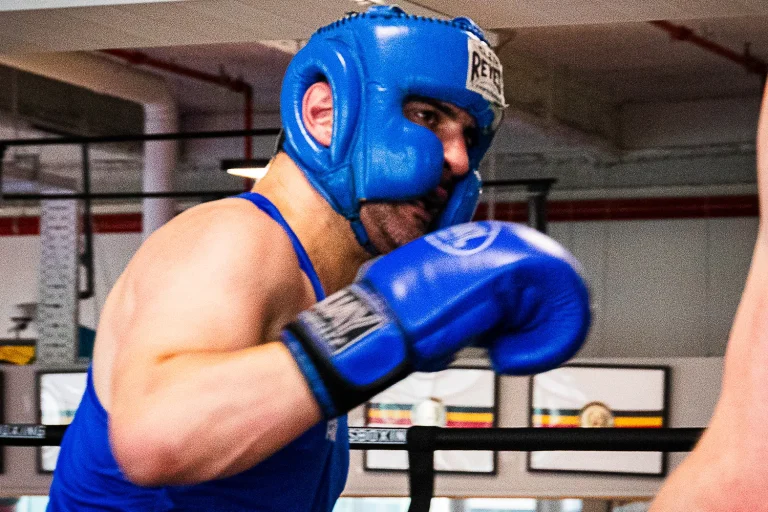





The clinch, an essential technique in boxing, is often misunderstood. It is the art of holding on to your opponent, used to catch your breath or prevent attacks. More than just a pause, the clinch is a subtle strategy that blends strength and intelligence. It lets you control the pace of the fight and set up close-range attacks.
It is not just an escape route, but a crucial skill and a key element in a boxer’s arsenal. Greats like Muhammad Ali used it masterfully, turning the clinch into a moment of observation and planning. The clinch is therefore a fundamental aspect of boxing, combining technique and tactics.
The Rules of the Clinch
In the world of boxing, every movement and every action is governed by precise rules, and the clinch is no exception. Although it is often seen as a simple manoeuvre to buy time, the clinch is in fact governed by a set of strict rules that vary according to federations and boxing styles.
The official rules on clinching are clear: it is allowed, but within certain limits. Referees watch clinches closely to make sure they do not turn into prolonged holding or immobilisation, which could slow the fight down excessively. In professional boxing, for example, a clinch that lasts too long or is judged to be an attempt to avoid fighting can lead to a warning, or even penalties.
The differences between boxing federations are also notable. In English boxing, the clinch is often quickly broken up by the referee, while in Thai boxing it is not only more accepted but also used as an opportunity for close-range strikes. This variation reflects the diversity and richness of boxing as a global sport.
It is essential for a boxer to know and understand these rules. A poorly executed clinch, or one that breaks the rules, can be costly during a fight. Experienced boxers use the clinch to their advantage, respecting the limits imposed while exploiting every opportunity to gain the upper hand over their opponent.
In short, far from being a mere embrace, the clinch is a tactical element governed by specific rules. Mastering it requires not only an understanding of the rules of the game, but also the ability to use them to your advantage, reflecting the complexity and strategic depth of boxing.
Clinch Techniques

The clinch in boxing is a refined technique that demands a deep understanding of fighting. Knowing when to initiate a clinch is crucial. It requires a sharp reading of the fight and the ability to anticipate your opponent’s movements. A well-timed clinch can change the course of a bout.
Execution and Control
Once engaged, the clinch must be both firm and controlled. The boxer uses their arms to restrict the opponent’s movements, often targeting the arms or upper body. This technique requires a combination of strength, precision and tactics.
Different Types of Clinch
There are different types of clinch, each suited to specific situations. The defensive clinch is used to neutralise an aggressive opponent or to recover after taking heavy shots. Conversely, the offensive clinch can open up opportunities for close-range strikes or strategic repositioning.
Clinch Strategy
Mastering the clinch is an art that goes beyond physical strength. It is about fight intelligence and the ability to feel the rhythm of the bout. Skilful boxers use the clinch like a game of chess, where every move is calculated and meaningful.
Clinch Strategies and Uses
In the boxing ring, the clinch is much more than a resting hug. It is a tactical weapon that boxers use to influence how the fight unfolds. A well-executed clinch can not only offer a moment of respite, but also disrupt the opponent’s rhythm, disorient them or even set them up for an imminent attack.
Masters of the Clinch
Boxing history is full of examples of champions using the clinch to their advantage. Legends such as Muhammad Ali and Mike Tyson mastered the art of the clinch, using it to control their opponents and create openings for powerful punches. These great names showed how the clinch, far from being a simple pause, can become a key part of fight strategy.
The Clinch in Different Situations
The clinch can be used in a variety of situations. In defence, it relieves pressure from the opponent, especially against heavy hitters. In attack, it can be used to pull the opponent in close, restricting their movement and leaving them vulnerable to short punches. The key is knowing when and how to clinch to get the most out of it.
Clinch Training

Clinch training is crucial for any boxer aiming for excellence. It is not just about strength, but a combination of technique, endurance and strategy. This specific training makes boxers more effective and confident in this phase of the fight.
Key Clinch Exercises
To develop clinching skills, several exercises are essential:
- Grip and Hold Drills: These exercises help strengthen the upper body and improve your ability to hold the clinch.
- Fight Simulation: Practising the clinch in real fight scenarios helps you understand how to use it strategically.
- Footwork and Positioning: Essential for manoeuvring and controlling the opponent in the clinch.
- Endurance Exercises: To maintain strength and performance throughout the fight, even during clinch phases.
Practising the Clinch in Different Scenarios
Clinch training involves practising the technique in a variety of fight situations. This helps boxers understand when and how to use the clinch effectively, whether for defence, recovery or attack.
Why the Clinch Matters in a Boxer’s Preparation
A complete boxer is one who masters every aspect of fighting, including the clinch. Dedicated training in this technique is therefore a crucial part of a boxer’s preparation, improving their overall performance and their ability to face different types of opponents.
The Clinch in Different Boxing Styles
In English boxing, the clinch is often seen as a tactical pause, a breather in the heat of the action. The rules are strict: prolonged clinches are quickly broken up by the referee. This requires boxers to master a quick and precise clinch, used to reposition or briefly unbalance the opponent.
The Clinch in Thai Boxing: A Central Part of the Fight
By contrast, in Thai boxing the clinch is a central element of the fight. Fighters use it to control their opponent and throw knees or close-range strikes. This form of clinch is more intense, involving a constant struggle for dominance and control.
Adapting the Clinch to the Style
Each boxing style has its own interpretation and use of the clinch:
- English Boxing: Quick, tactical clinch, mainly used to reposition.
- Thai Boxing: Intense clinch, used for control and close-range strikes.
- Kickboxing: Limited clinch, often used to create distance or a pause.
- Amateur Boxing: Clinch briefly tolerated, mainly to avoid punches.
Conclusion
The clinch is much more than a defensive manoeuvre; it is a subtle art in boxing. It is a key moment where strategy and strength meet, giving the boxer a chance to regain control or turn the fight around. The great names of boxing, such as Muhammad Ali and Mike Tyson, demonstrated the crucial importance of the clinch, using it intelligently to dominate their opponents.
In summary, the clinch is a fundamental part of boxing, combining tactics and technique. It is a skill that sets elite boxers apart, revealing their ability to combine physical strength with strategic finesse. The art of the clinch holds the essence of boxing: a duel of minds as much as of bodies.
Want to master boxing clinch techniques in Brussels? Join our club dedicated to English Boxing! Whether you are a beginner or experienced, take advantage of a FREE first trial class to develop your clinching skills. Contact us on +32 473 29 42 99 or via our contact form to find out more.